Start with what students need to learn. Choose the order of your chapters and write directly on the page in your own voice.
Example syllabus goal
Locate a target before moving the arm.
Coursebook chapter
Name a position
How a robot reaches · Name a position
Open textbooks
Make an open reading your own.
Find a passage in the open textbook library, bring it into your chapter, and adapt it with its source credit. Here, a reading from Elementary Algebra helps students locate the robot’s target from its shoulder.
Elementary Algebra · Connexions title page by Wade Ellis and Denny Burzynski, CC BY 2.0
Create with AI
Draft with AI. Decide what goes in.
Ask for a worked example that shows how to locate a target 1.8 metres to the right and 1.2 metres up. Review the draft. You can refine it, discard it, or apply it to the book and keep editing.
How a robot reaches · Name a position
Book and page views
See how the pages read together.
Work on one page at a time or open a spread to check how the explanation and diagram carry across facing pages.
How a robot reaches · Name a position
Design and Read
Choose what students see.
Try a different page background, apply the one that fits, and open Read to check the finished chapter. Students see the explanation, source credit, and worked example you chose.
How a robot reaches · Name a position
Teach.
Experiences
Put the lesson on the page.
See how professors can use motion, models, and cases to teach. Every example comes from a coursebook made in Unibook.
Live illustrations
Some ideas are hard to grasp in a single frame. Add motion to show what changes, what stays the same, and in what order.
How an oxbow lake formsFollow the water · The river cuts across the neck of a bend. Sediment closes off the old channel, leaving a crescent-shaped lake.
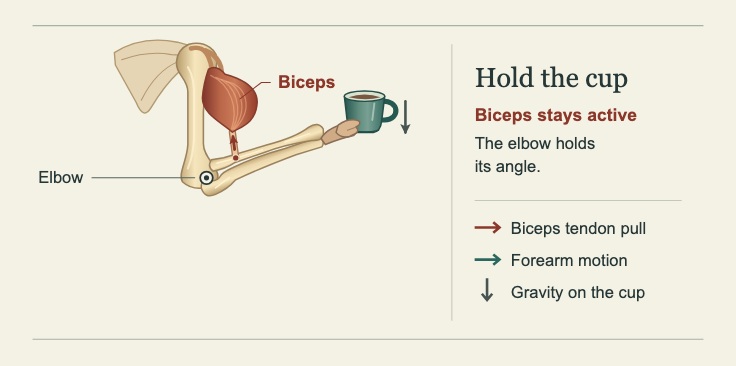
What it takes to hold a cupThe body in motion · Watch the biceps lift, hold, and lower the same load.
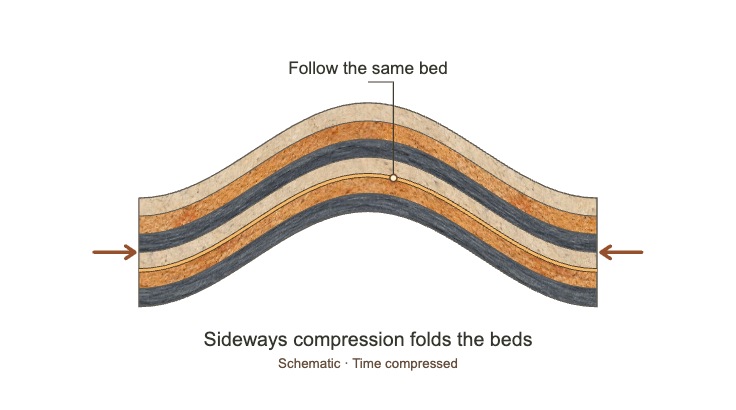
A fold takes shapeThe slow Earth · Keep one bed in view through compression and erosion.
Illustrations
Create original figures for your explanation. Make a bond visible, or give a case study a setting students can return to.
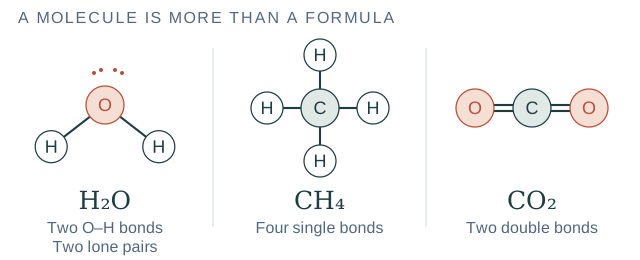
A molecule is more than a formulaChemical reactions · Compare the bonds in water, methane, and carbon dioxide. The flat methane diagram shows connections. The molecule itself is tetrahedral.
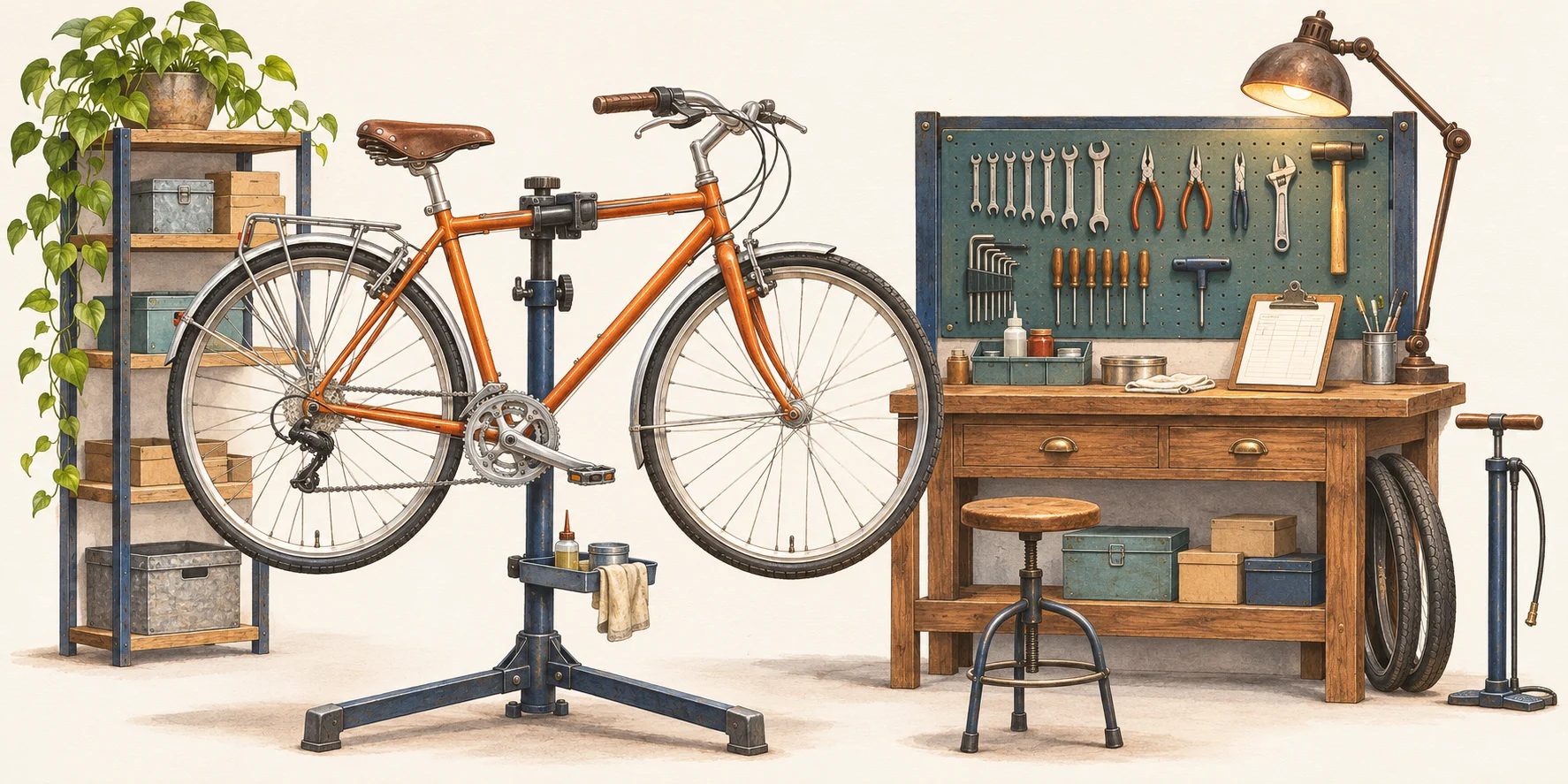
Inside the Harbour Cycle workshopAccounting: the first month · Meet the repair shop students will follow as they record purchases, repairs, and payments.
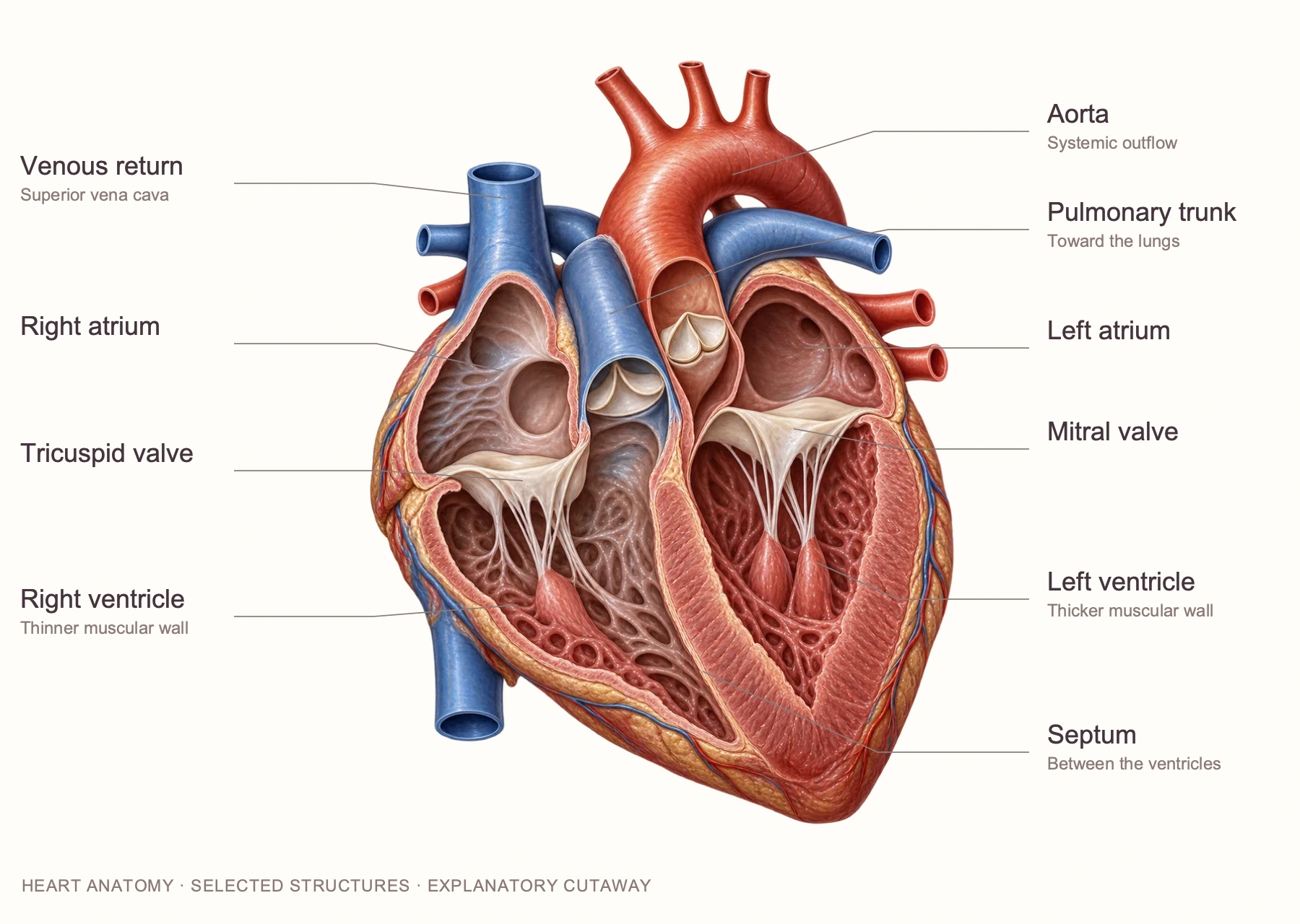
Inside a four-chamber heartThe living interior · See how chambers, valves, and vessels fit together in a labelled cutaway.
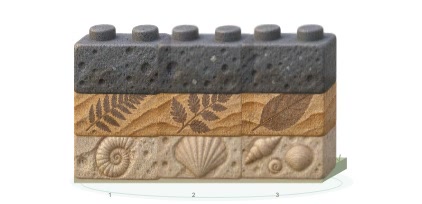
Read the layers across a cliffThe slow Earth · A landscape illustration lets students follow a single rock bed across a cliff face.
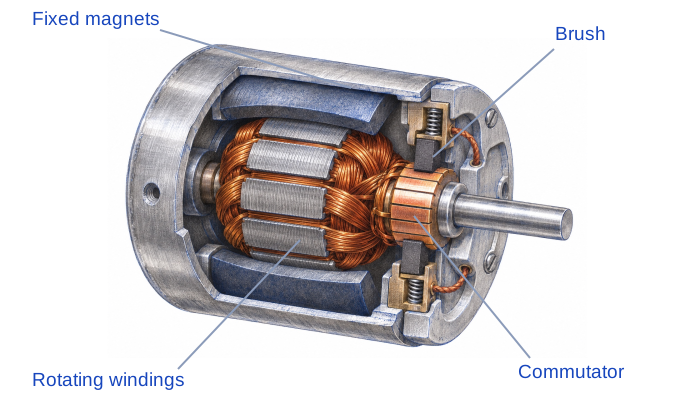
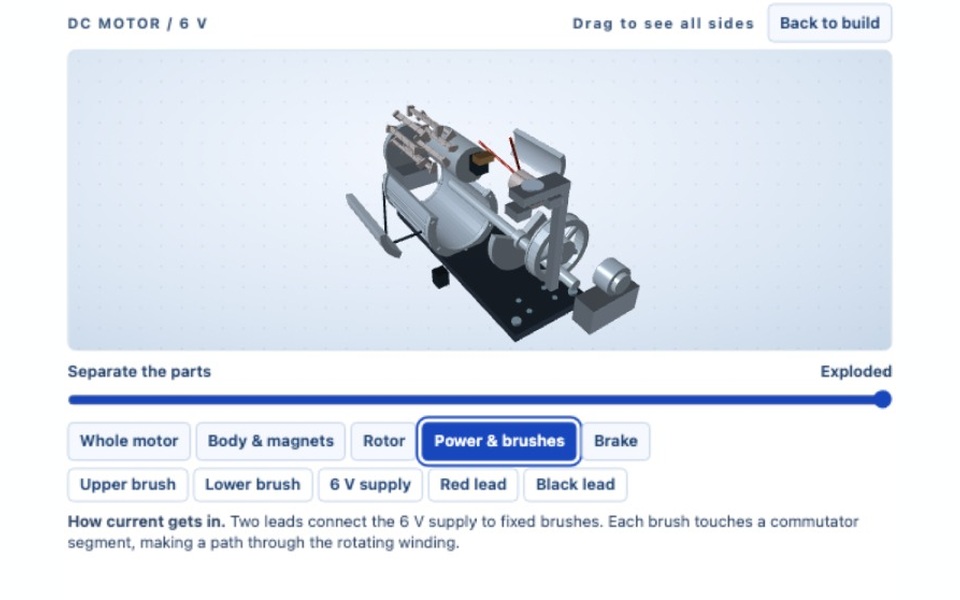
An electric motor, opened upThe turning point · See the brushes, split ring, and rotor in one view.
A train, a platform, two viewpointsLight, time and motion · An editorial illustration sets up the two observers used in a relativity lesson.
Narrated video
Create a short, narrated film in the chapter. Use it to connect what students observe with a process they can’t see directly.
The bend that staysWhy metal bends · Bend the same strip twice, then see what changed inside the metal.
Follow the oxygenThe living interior · Two synchronized views follow oxygen from a blood cell across the capillary wall.
Charts, diagrams, and maps
Create graphics around the question you want students to answer. Put the relationship, the quantities, and the units in the same view.
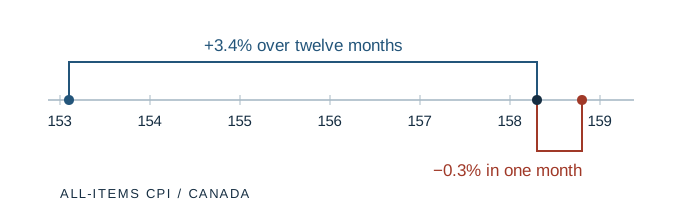
One endpoint, two windowsThe Economy in Evidence · The same December 2023 endpoint yields +3.4% over 12 months and −0.3% over one month.
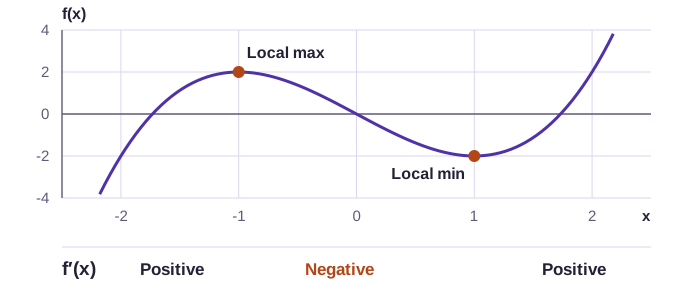
What the derivative revealsThe Shape of Change · The curve rises where its derivative is positive and falls where it is negative.
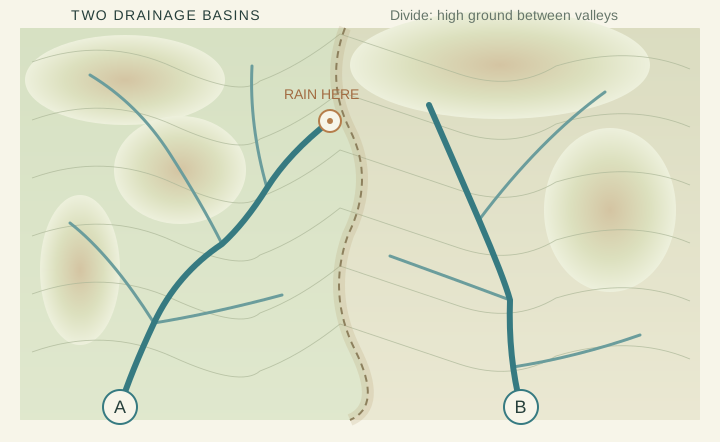
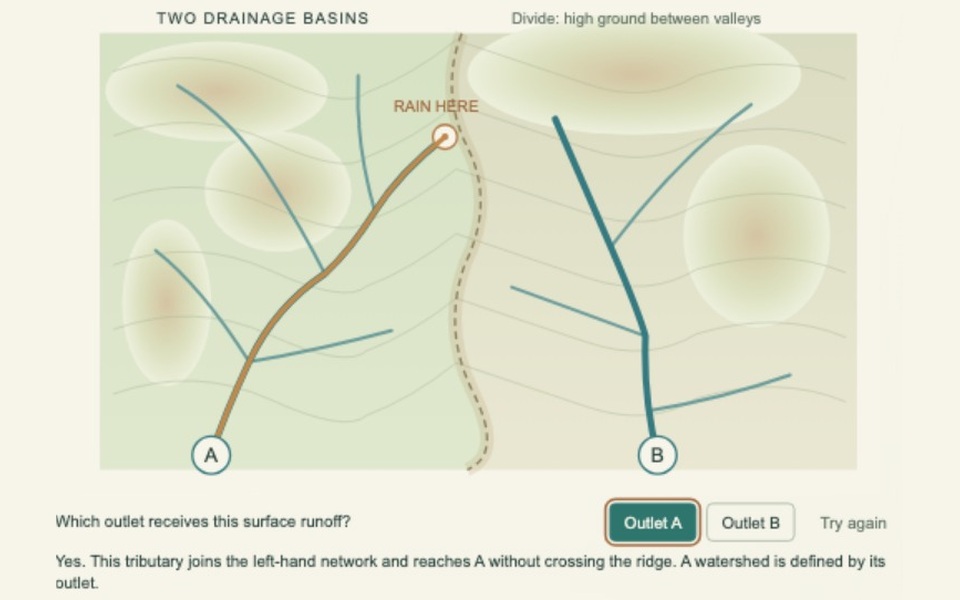
Where does the rain go?Follow the water · Read the ridgeline and tributaries to trace runoff to its outlet.
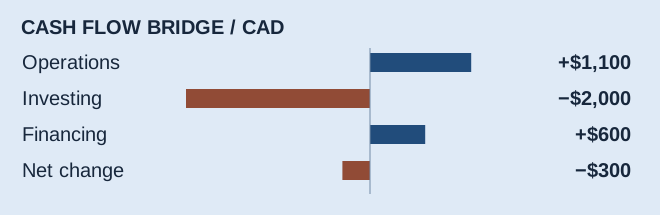
Why cash fell by $300From Entry to Evidence · Separate operating, investing, and financing cash flows to explain the net change.
Simulations and tools
Build a lab or a tool around the question you teach, without writing code. Students can change a variable, see the result, and compare it with their prediction.
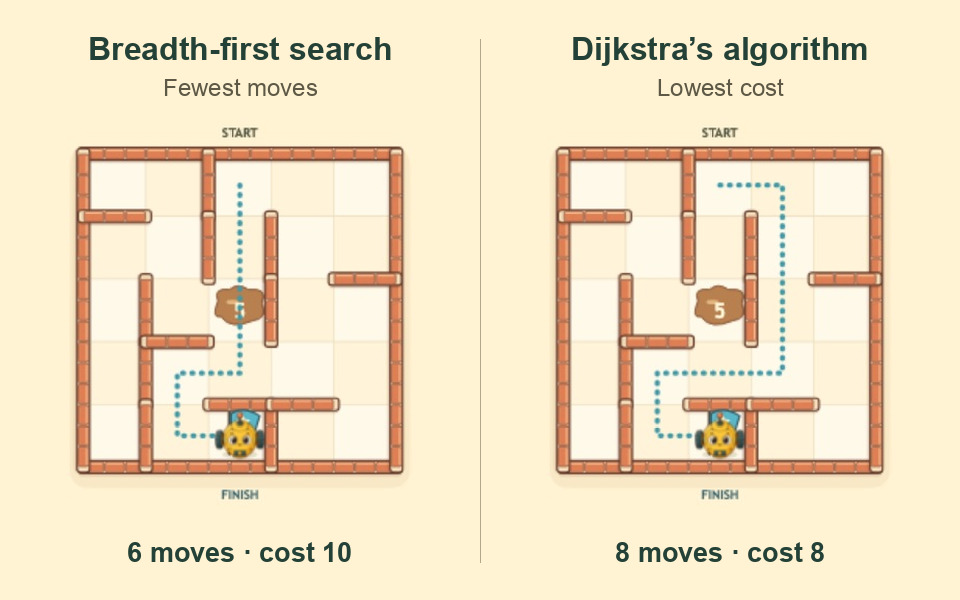
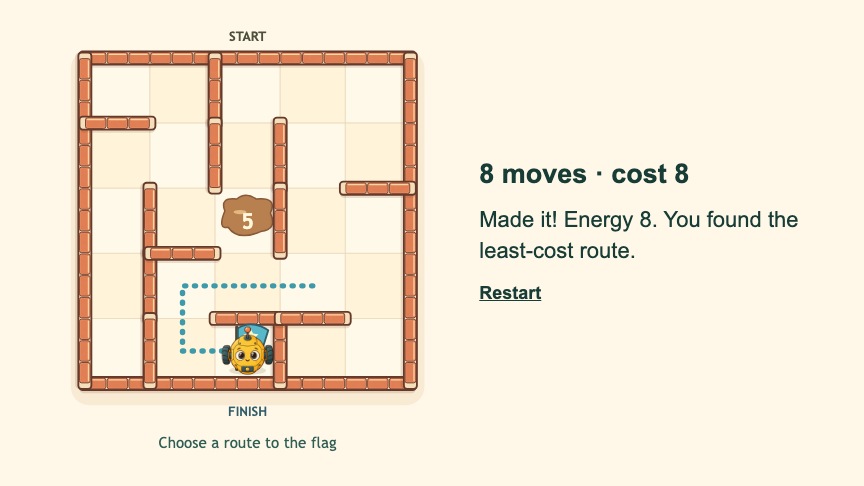
Fewest moves or lowest cost?Algorithms: finding a path · Breadth-first search takes a six-move shortcut through the mud. Dijkstra’s algorithm takes eight moves and uses less energy.
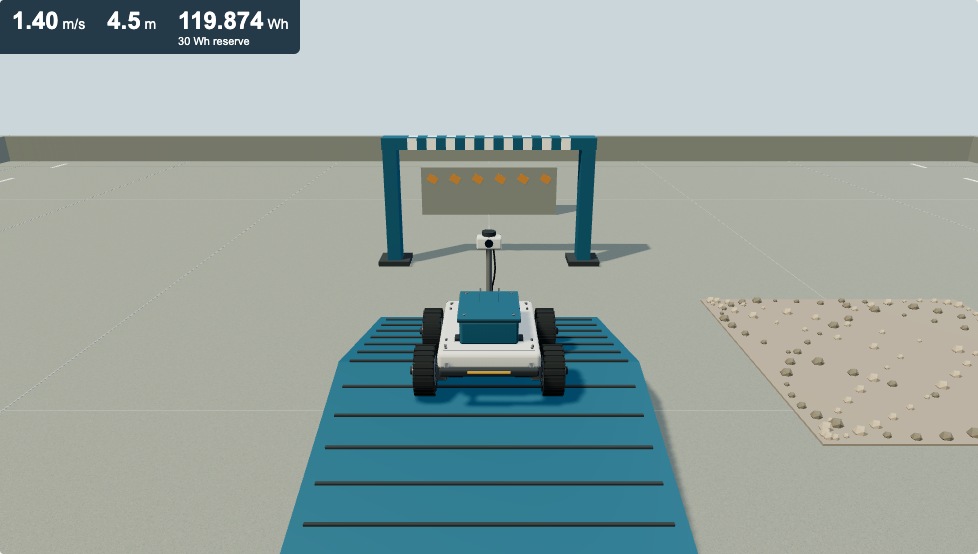
Will the rover make it back?Designing a Field Rover · Watch the distance and battery readings change as Mica drives.
Build a fossil islandThe slow Earth · Assemble the rock record layer by layer, then read back the order of events.
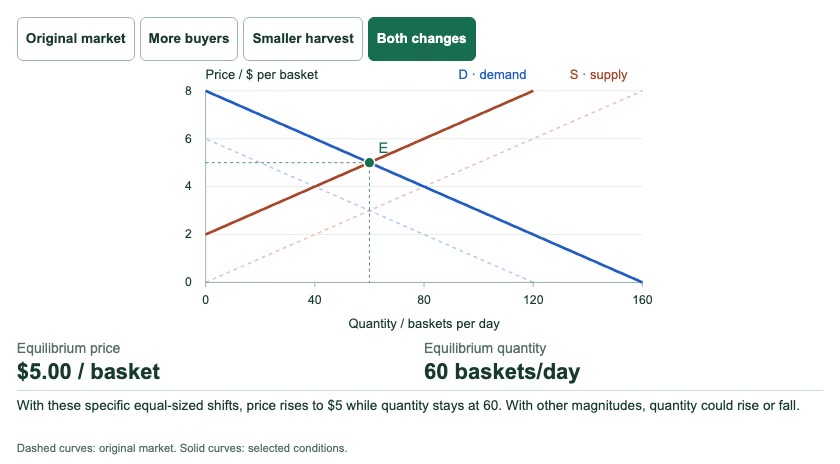
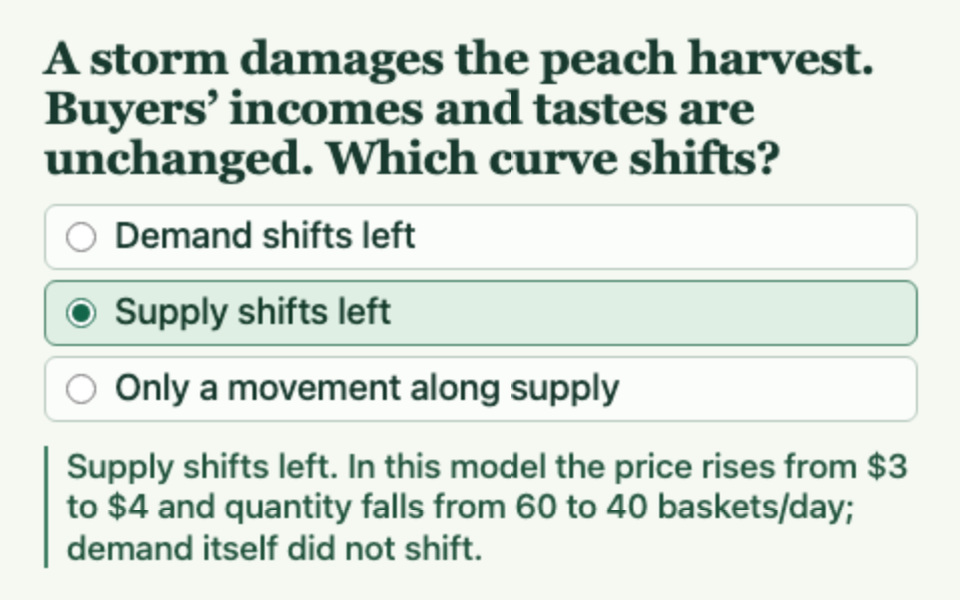
Same price, different causesDemand & supply · More buyers or a smaller harvest both raise the modeled price to $4. The model sells 80 baskets with more buyers and 40 with the smaller harvest.
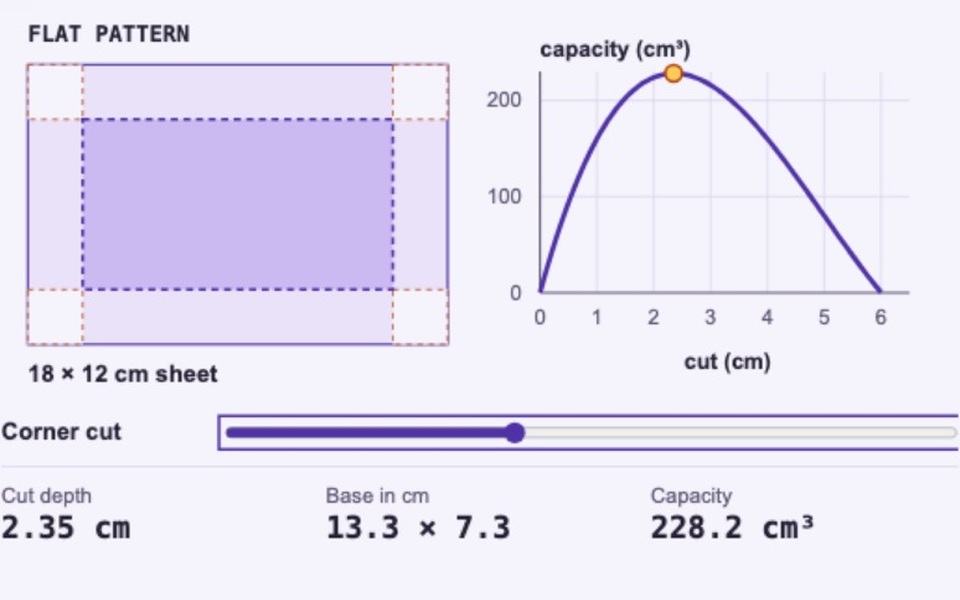
Cut a larger boxThe Shape of Change · Change the corner cut and compare the new pattern, base, and capacity.
Orbit a brushed DC motorThe turning point · Open the assembled motor on the bench and turn it to inspect how its parts fit.
Interactive exercises
Put a quick multiple-choice question or a hands-on task right in the book. Give students feedback they can use to revise their answers.
Which curve shifts?Demand & supply · After a poor peach harvest, students choose one of three answers and get immediate feedback on their reasoning.
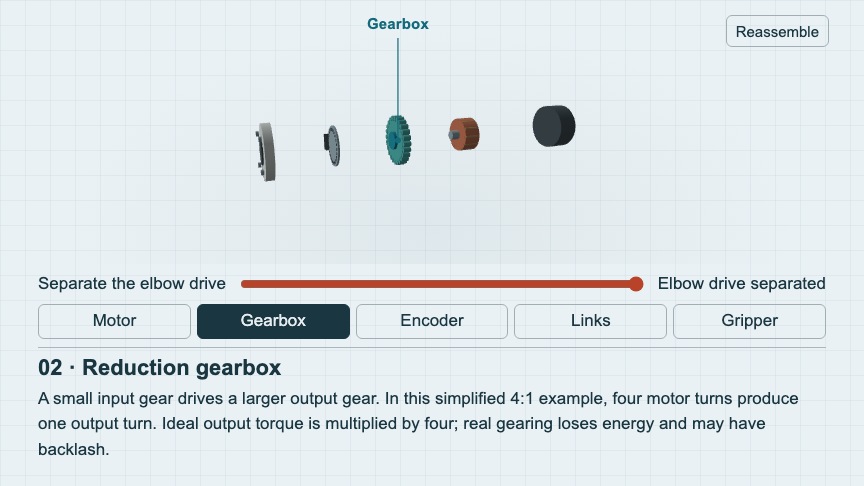
Open up a robot’s elbowHow a robot reaches · Separate the drive, then select the motor, gearbox, or encoder to see where it sits and what it does.
Find the cheaper routeAlgorithms: finding a path · The six-move shortcut costs 10 energy. The eight-move path around the mud costs 8.
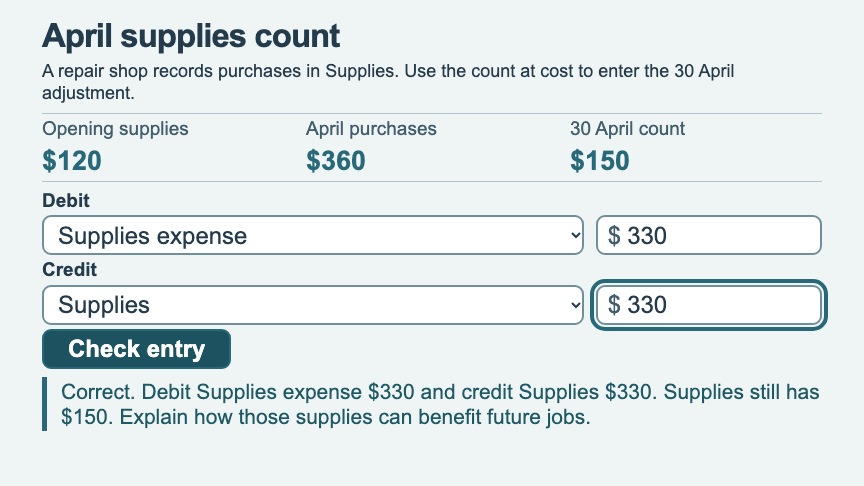
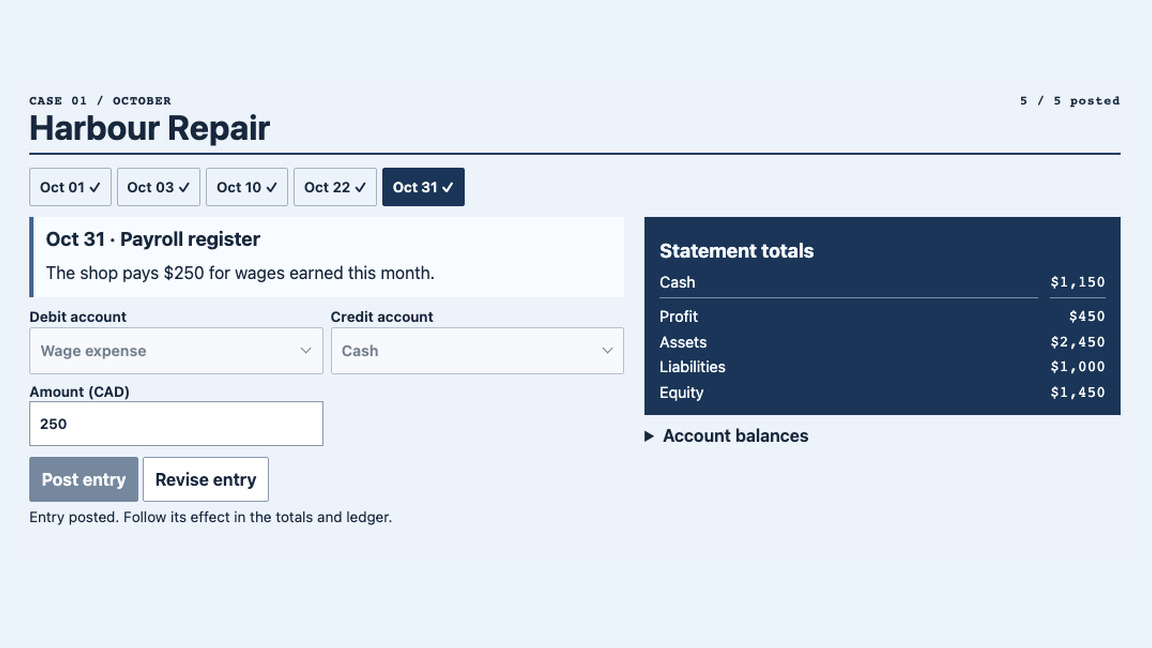
What did the shop use?Accounting: the first month · Enter the month-end adjustment. Feedback shows why expensing all $480 overstates what the shop used when $150 remains on hand.
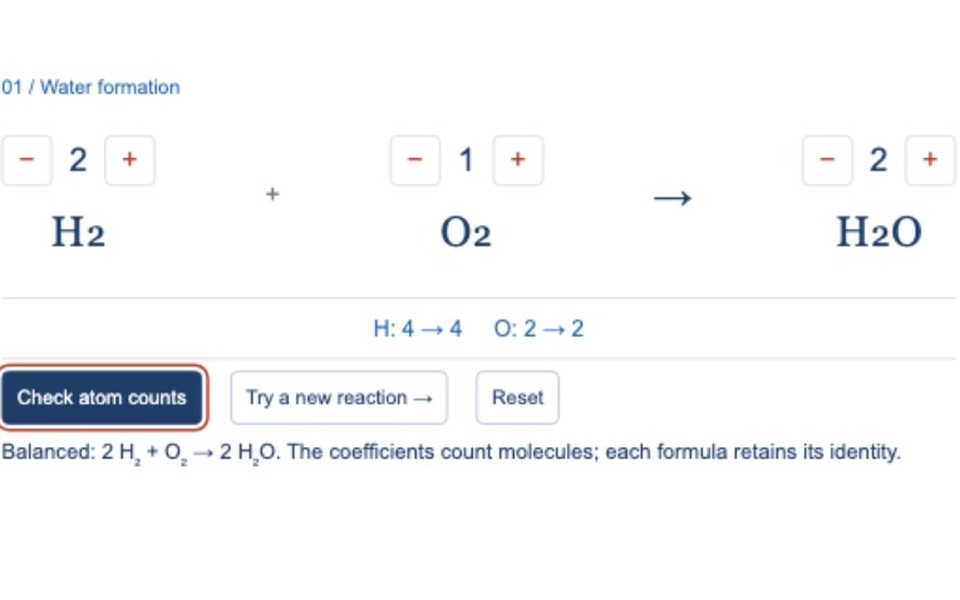
Balance the atomsChemical reactions · Change molecule counts and check the atom ledger before moving to a new reaction.
Follow a raindrop to its outletFollow the water · Choose an outlet, then trace the tributary to check which side of the drainage divide you’re on.
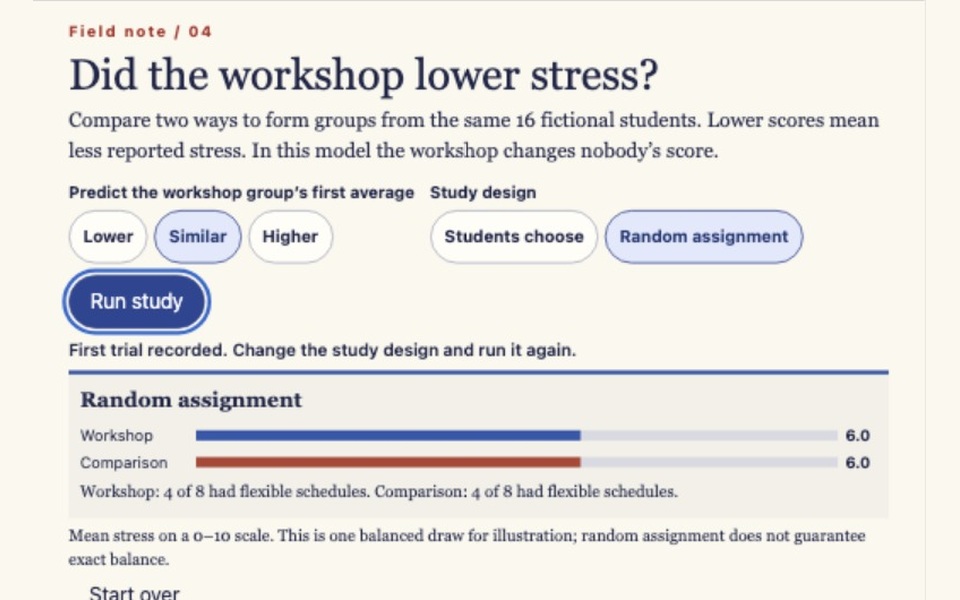
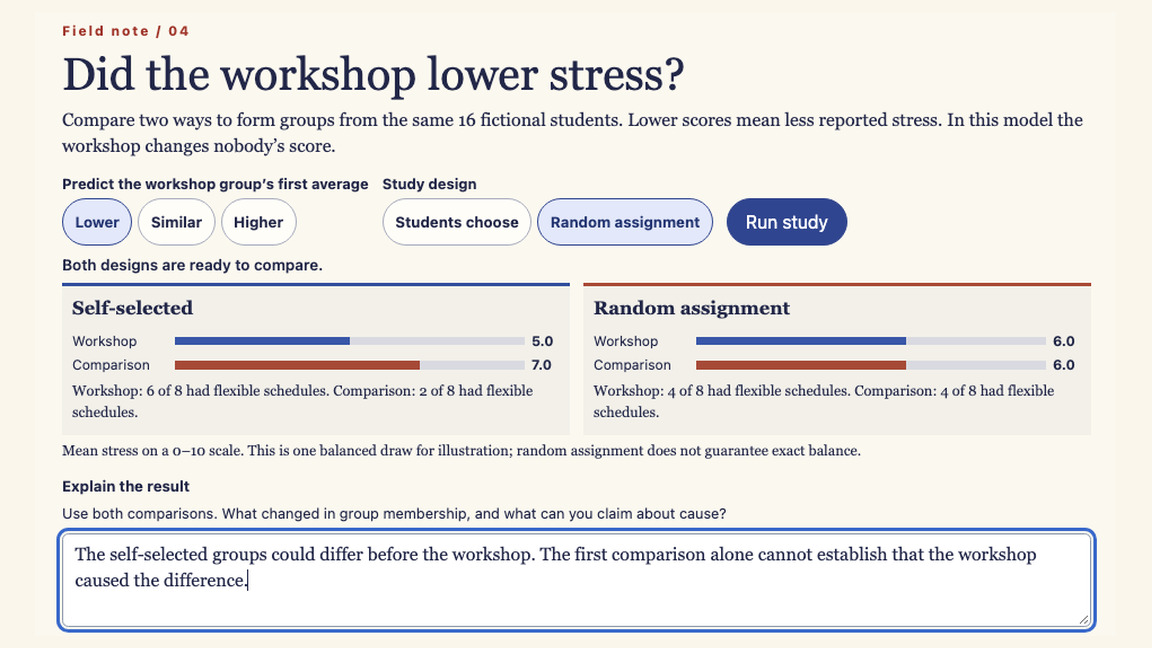
Does a workshop lower stress?Mind in Context · Predict the outcome, then compare how self-selection and random assignment change what you can conclude.
Programming in the book
Put a runnable Python workspace right beside the explanation. Students can debug in the terminal, check their work, or turn data into plots with Matplotlib.
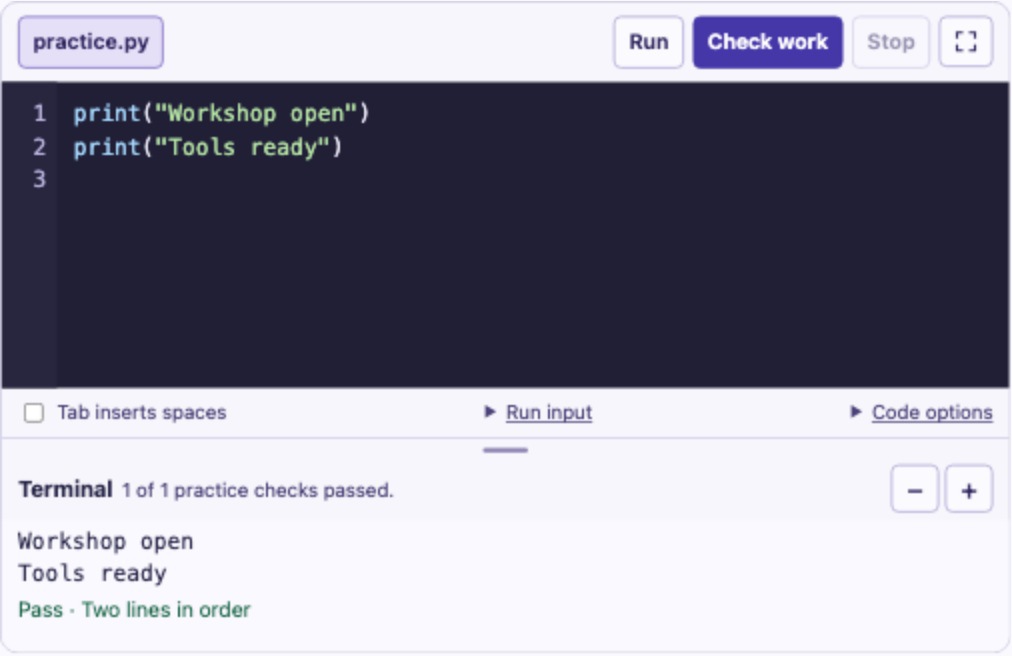
Run, debug, and check your workLearn to Think in Python · A missing parenthesis shows up in the terminal. Fix it and check that the program prints both lines in order.
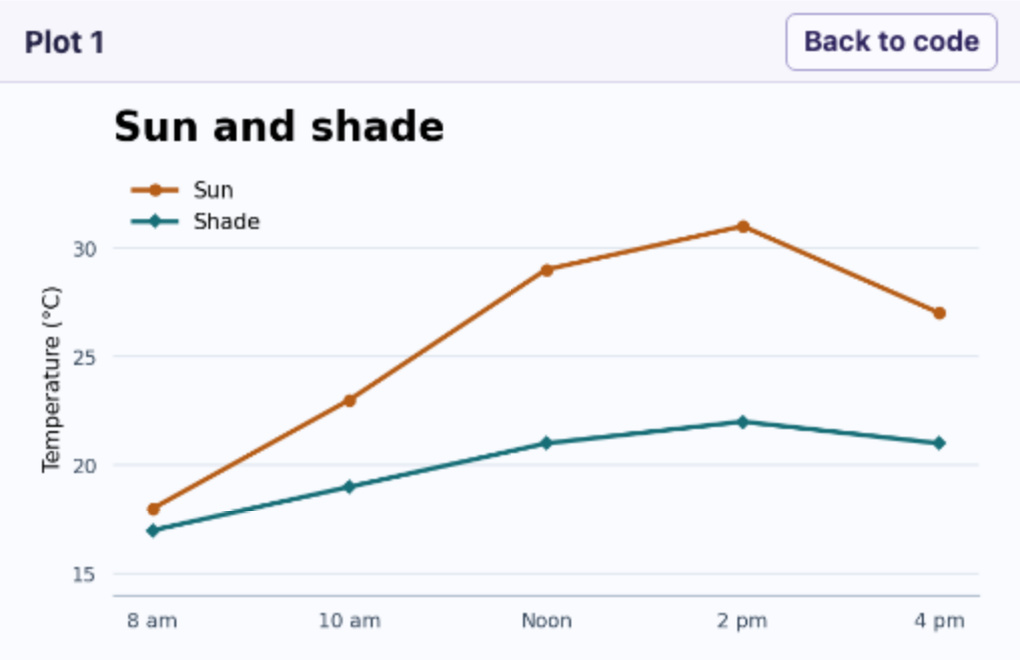
Turn readings into a chartRun Matplotlib in the book and compare a day of sample temperatures in sun and shade. Students can open the plot at a larger size or download it.
Guided courseware
Turn a case you teach into a lesson students can work through.
Start with your own case, dataset, or lab. Show students how you’d work through it, give them a new situation to reason through, and let them revise their answer using feedback.
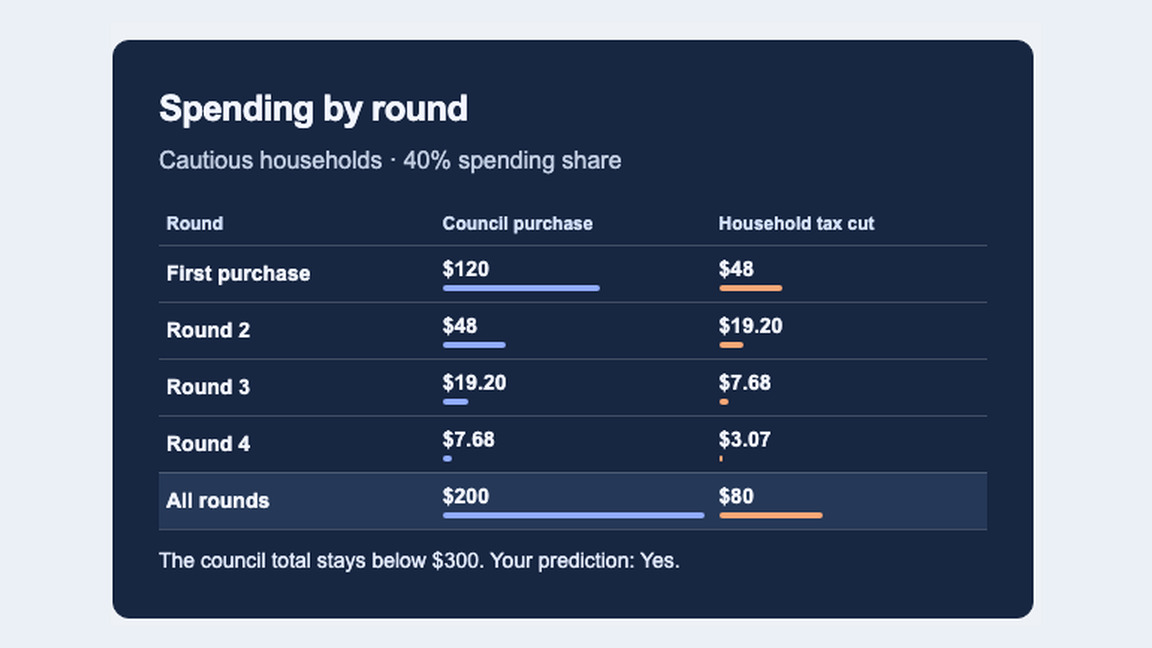
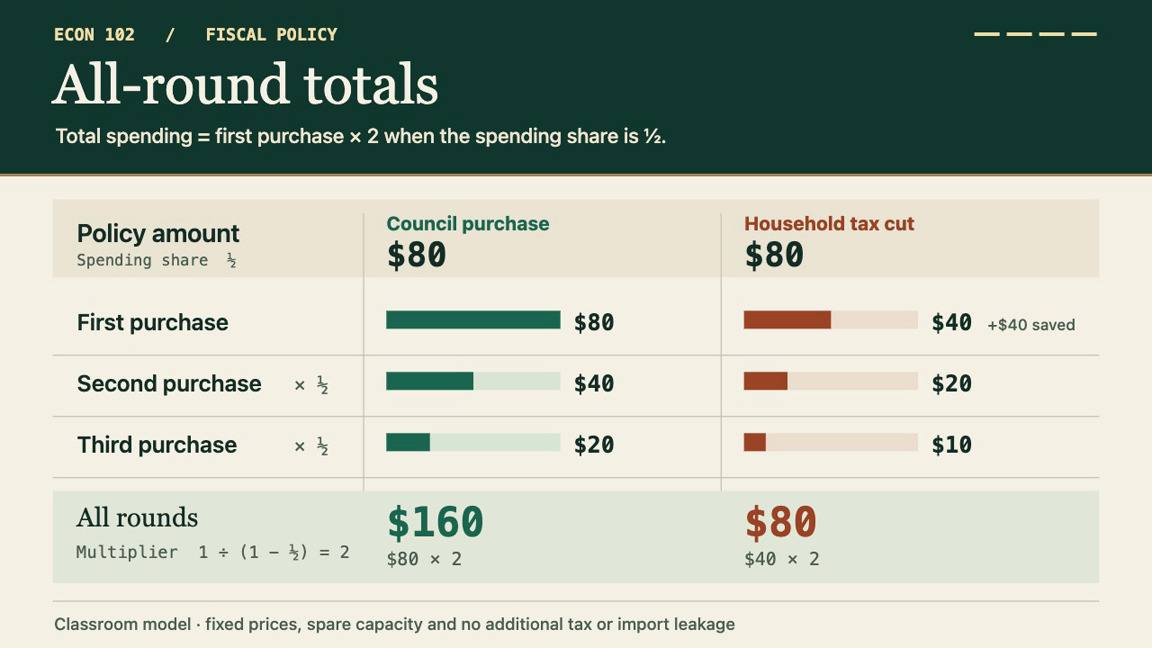
Work through an $80 council purchase and an $80 tax cut. The ledger follows each first purchase into the next round of spending.
From the coursebook’s worked example, Where spending starts.
Make a prediction. Run the model.
Students choose a scenario and commit to a prediction before they see the numbers. With cautious households, the two paths total $200 and $80.
Student view · The prediction stays next to the result.
Use the evidence to explain the gap.
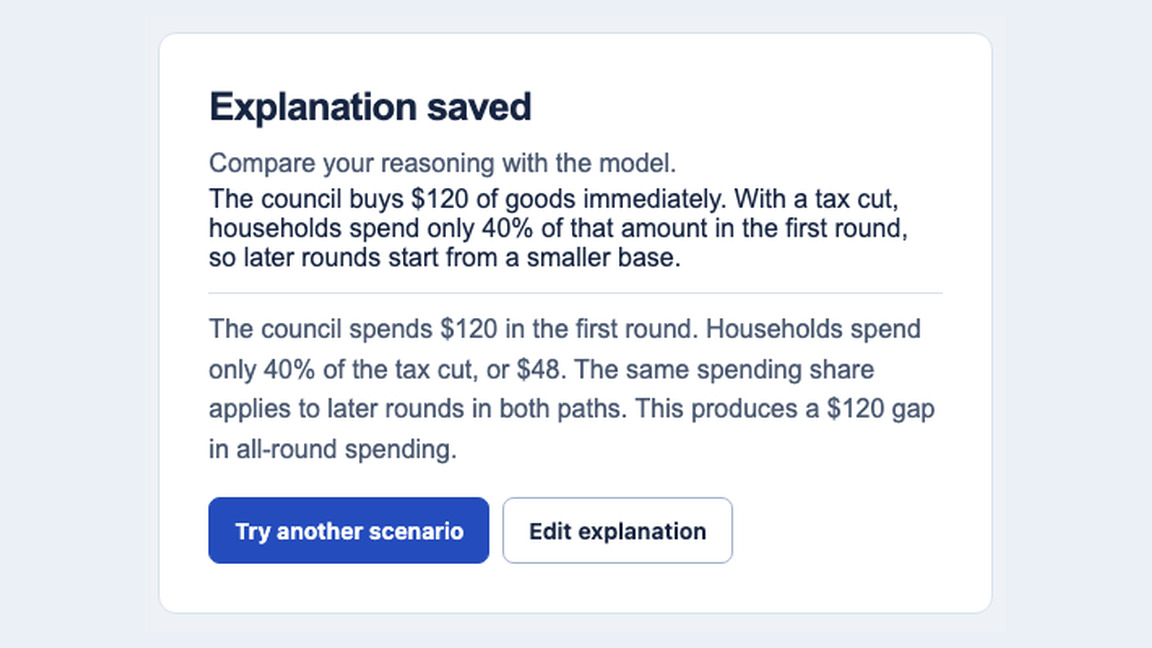
The next film picks up where the run left off. Students use the first purchases and later rounds to explain why equal policies led to different totals.
Student view · The result carries forward into the explanation.
What will students do in your course?
Give them evidence to work with and a question worth answering. See how that looks in four different courses.
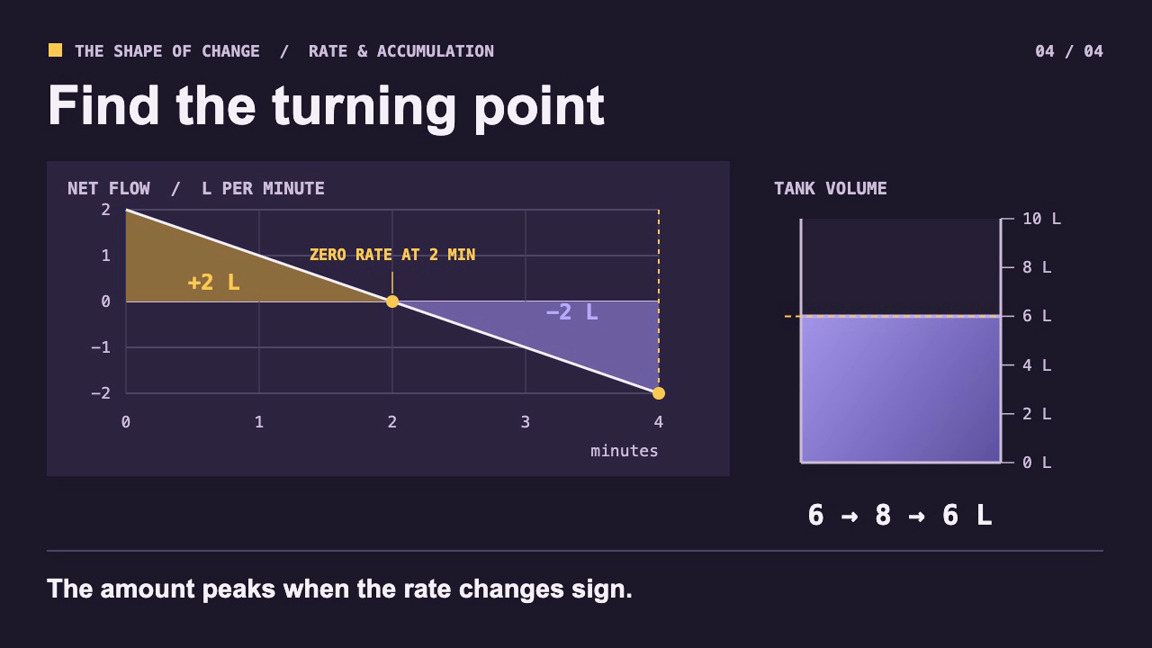
CalculusWhen is the tank fullest?Predict the peak from the flow graph, then check it against the rising and falling water level.
PsychologyDid the workshop lower stress?Group the same fictional students two ways and explain what the first comparison can support.
AccountingFollow the money through the ledger.Post source documents to the journal, correct a customer deposit entry, and see what changes in the statements.
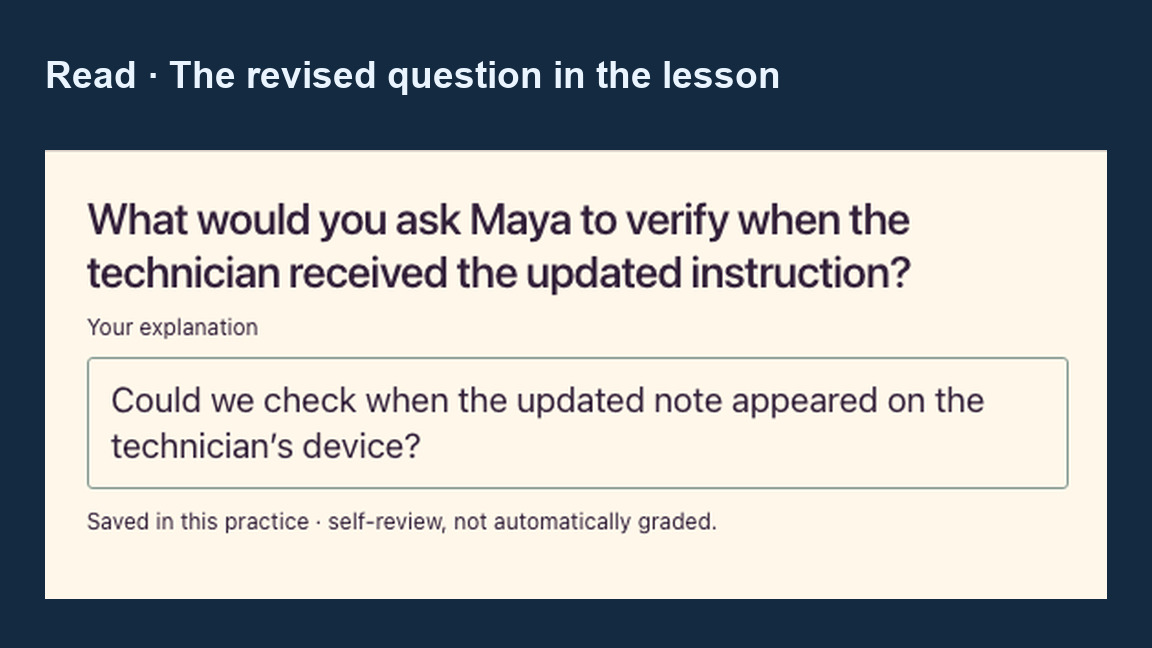
Professional SalesTrace one missed job update.Compare two versions of a job instruction and decide what to verify with the buyer before drawing a conclusion.
Bring a case from your own course.
Start with the materials you already teach. In Workspace, set the lesson order, write the question you want students to answer, and preview it in the book.
The original case · Professional Sales
The job instruction changed.
A repeat visit raises a question about when the technician received a revised instruction. The class starts with three records.
Paper route sheet printed
Dispatch posts a new version
Technician leaves with the paper copy
From the case notes to the student’s questionWatch the professor revise the final question in Write and see it appear in Read.
Inspire.
Team
The people behind UKIO.
We’re building Unibook with professors so the materials students use can reflect the courses their instructors actually teach.
CO-FOUNDER & CEO
Alessandro D’Aquino
Students’ Union President with Board of Governors service. Leads customer discovery, faculty relationships and commercialization.
CO-FOUNDER & CTO
Mbongeni “Bo” Ndlovu
Ten years of software development experience and a master’s degree in AI. Helped develop and maintain materials for the Practical Utilization of AI microcredential delivered by Digital Nova Scotia and StFX.
250+Professors consulted
113North American institutions represented
15Atlantic professors selected for the planned pilot
UKIO-reported customer discovery. The controlled pilot is planned for 2027.
The next steps
January–April 2027
Controlled faculty pilot with 15 selected professors. Establish preparation-time, usability and support-cost baselines.
May–December 2027
Assess student access, purchasing, repeat use, reliability and accessibility, subject to course schedules and institutional requirements.
2028
Pursue initial paid department deployments and more repeatable onboarding. Use the results to guide Canadian and US expansion.
Bring a course you teach.
We’ll show you how your readings, lessons, and activities could come together in Unibook.
 Request a demo